For a working mom trying to build an everyday makeup for professional women, blush is the one step I double-check before leaving the house, and it's also the one that surprises me most at the office. I've done six years in HR at a mid-size financial services firm here in Charlotte, which means fluorescent-lit conference rooms, hallway chats, and at least two impromptu meetings a week I didn't plan around. Blush isn't the villain here. It's just the product that looks right in your bathroom mirror at 7:10 a.m. and quietly becomes something else by the time your 10:30 meeting is over.
The core problem is that the office does not hold color still. Fluorescent lighting flattens skin and brightens pigment, so a blush that read as fresh and subtle at home can read as flushed and overdone in a boardroom. Then your skin produces oil through the morning, and the pigment oxidizes, which means the shade deepens and shifts as the hours pass. Add a humid Charlotte commute and a second cup of coffee, and your 7 a.m. application is effectively a different product by 11. This is why I now hold one line above all others: If it can't survive a Tuesday, it's not worth it. Blush is the fastest way to find out which products earn a spot in my work bag.
Why Blush Is the First Thing to Turn on You at Work
You can do everything else right and still get caught by blush, because blush sits in the most visible, most moving part of your face. Cheeks move when you talk, when you laugh, and when you lean across a table to grab a pen, and every movement shifts how the color reads. In six years I've walked into enough meetings to see the pattern: the woman with the carefully neutral face and one too many layers of blush, who looks embarrassed when she's not.
The lighting is the main trap. Fluorescent tubes put out a cool, even light that removes warmth from skin and makes any pigment look stronger. The blush you chose in warm bathroom lighting will look more saturated under it, not less. This is a basic fact of office makeup routine that I learned the hard way in my first year, sitting under the panel lights in a third-floor conference room and wondering why everyone seemed to be asking if I was feeling warm. That lesson is the reason I now treat blush as the one variable in an everyday makeup for professional women that gets the least product and the most attention.
The Oil-and-Oxidation Shift You Don't Plan For
Here's the second trap, and it's the one nobody tells you about. Most blush formulas darken as they sit on skin. Natural oil from your T-zone mixes with the pigment through the morning, and oxidation deepens the color over a few hours. What was a soft wash at 8 a.m. is a clearly visible patch by noon. This matters more in the office than at a weekend brunch in South End, because you're in the same four walls under the same lights for eight hours. You see the shift happen in real time, and by the time you catch it in the bathroom mirror, everyone else has seen it too.
The fix is not to use less product in a panic. The fix is to start with so little that even a full day of oxidation leaves you well within range.

Start Minimal: A Method for Office-Safe Blush
The only blush application method that works for me in an office is to build from nearly nothing and stop early. I don't pick up product and swirl it across my cheeks first, because that's how you end up with a stripe. I treat blush like a wash of color that should survive a full workday, not like a statement that should survive the commute.
For an everyday makeup for professional women, my method has three steps, and I do them in this exact order:
Tap, don't swipe. Tap the brush or fingertip into the product once, then tap the excess off on the back of your hand. The color that remains is closer to the right amount than what you started with.
Apply in one sheer layer, then wait. Put the first layer on, then do your hair or check your bag for five minutes. If you still want more, add a second sheer layer. Most days I don't add it.
Look at yourself in daylight before you leave. Open the front door or stand by a window and check once more. The mirror in your hallway lies to you less than the one in the bathroom, and it's closer to what the office will do.
Cream vs. Powder in a Workday
This is the choice that changes everything, and it depends on your skin and your day. Cream blush melts into skin and reads as skin, which makes it forgiving under fluorescent light. It also moves with oil, so on a long day it can fade or slip. Powder blush sits on top of the base and holds its shape better through a humid commute, but it's also easier to over-apply, because the powder shows up immediately and stays exactly where you put it. Here's the same question laid out side by side for a workday:
Feature | Cream Blush | Powder Blush |
|---|---|---|
How it wears | Melts into skin, looks like a natural flush | Sits on top, color stays where it lands |
Under fluorescent lights | Softer, more forgiving | More visible, easier to read as too much |
Through a humid commute | Can fade or slide with oil | Holds up well, but needs a lighter hand |
Where it fits | Sheer mornings, quick fixes between meetings | Long days when you won't get a mirror moment |
Ease of over-application | Harder to overdo | Very easy to overdo |
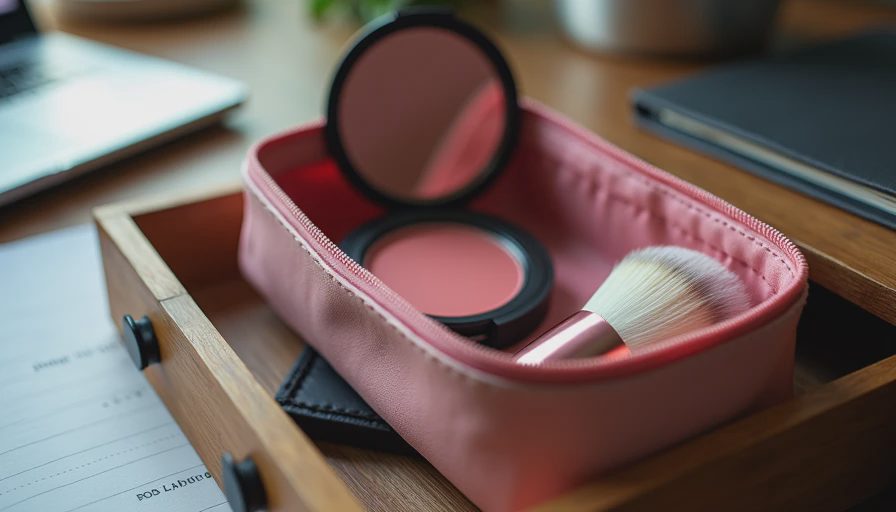
For the office, I lean cream on most mornings because it forgives a rushed application, and rushed is the only kind of application I get with a 5-year-old and a 3-year-old in the house. Cole has a habit of needing my attention exactly as I'm finishing my face, so I need products that look better with less precision. I keep a cream blush in a muted rose shade in my work bag for touch-ups, applied with clean fingertips in the bathroom, because fingers add warmth and the color blends itself. Powder still has a place: on long days when I know I won't see a mirror until evening, I set the cream with a light dusting of powder in a soft peach tone, using a fluffy brush, and the two layers stay put.
Placement and Shade: Where the Color Sits Is the Real Message
You can apply the right amount and still send the wrong message if the color sits in the wrong place. Placement controls how the blush reads, and under office lighting, placement matters more than formula.
High on the Cheekbone, Not the Apple
The apple of your cheek is where color goes when you're out with friends; it reads youthful, warm, and social. In a meeting, that's a lot of information. The high point of the cheekbone, the area just under your eye and toward your ear, reads as natural, daylong warmth. It doesn't say "I just ran in from the cold" or "I had a glass of something." It says you got sun at some point in the last year. For anything involving a conference table, I place color on the cheekbone high point and blend up toward the temple, keeping the outer half of the face quieter than the center.
Dusty Rose and Soft Peach Before Anything Saturated
Shade is the second half of the control. High-saturation pinks and corals are beautiful in photos and exhausting in person, because they do the talking for you. In an office, the goal is color that looks like it came from inside you, not from a tube. Two families do this reliably:
Dusty rose — reads as a natural flush on most fair-to-medium skin, and it stays understated under fluorescent light.
Soft peach — reads as warmth rather than color, which makes it forgiving in summer humidity and on days your skin is doing its own thing.
Save saturated colors for evenings and weekends. The shade that works in your car mirror on a Saturday morning is not automatically the shade you want in front of your team on a Tuesday. This is one more example of where the practical approach to everyday makeup for professional women wins over what looks exciting in the aisle of Target. And my husband David has learned not to ask if I'm feeling warm when we walk into a dinner out; it's his polite code for the color doing too much.
The Conference Room Self-Check: Three Steps Before You Stand Up
I do this every time I'm about to present, and I've started teaching it to the newer managers in our building. It takes ten seconds, it catches the blush problem before anyone else does, and it's the last ten seconds of my office makeup routine. This is the closest thing I have to a formula, and it's worth keeping in your head:
Look down. Tilt your head and glance at your reflection on your phone screen, set face-up on the table. If the color on your cheeks is the first thing you notice, it's too much. You should notice your eyes first, then your cheeks.
Step to natural light. Walk to the window, even for two seconds. If the blush disappears into your skin, you're in range. If it still announces itself, press a tissue over the area and blend the edges with clean fingertips or a sponge.
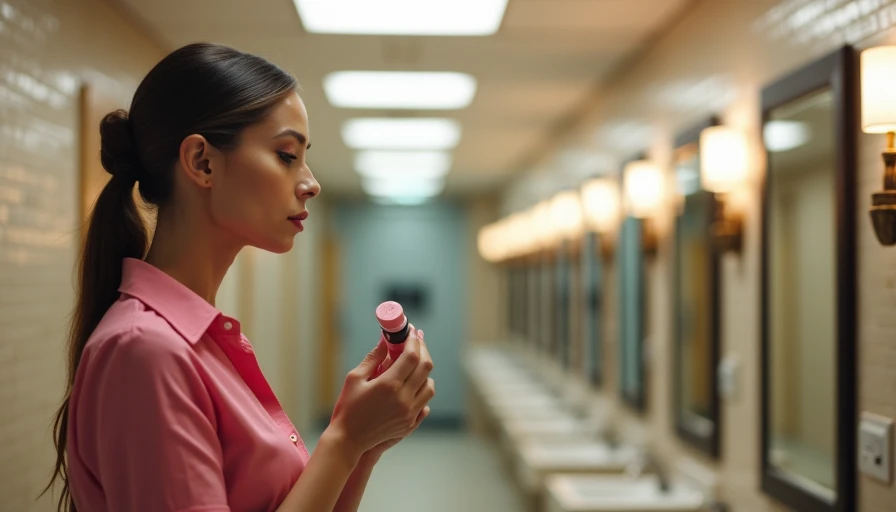
Ask the mirror question. In the bathroom, stand back two feet from the mirror, not nose-to-glass. The mirror on the wall, from arm's length, is what your coworkers see. If that view says "fresh," you're done. If it says "flushed," press a tissue; don't rub.
That three-step check has saved more mornings than I can count, including the day a director walked into my office for a last-minute one-on-one and I caught myself at step one before I stood up. Ten seconds is a small price for not spending the whole meeting wondering whether your face is doing something.
Here's where I land after six years of trial and error in a real office, not in front of a ring light. For an everyday makeup for professional women, blush belongs in the routine, but it belongs there in small, controlled amounts. Start sheer, place it high, keep the shade muted, and give yourself one honest mirror check before you walk into the room. The version of you that manages a Tuesday, with the commute, the meetings, and the school pickup run for Ella and Cole, does not need a cheek that announces itself. She needs color that quietly confirms she's present, rested enough, and in charge. That's the difference between wearing the blush and letting the blush wear you.