Most everyday makeup for professional women fails within the first ten minutes of a morning meeting, and it has almost nothing to do with skill. I say this as an HR manager who has spent six years in a mid-size financial services office in Charlotte, North Carolina, watching eyeshadow that looked fine in the bathroom mirror turn into something else entirely under the conference room lights. The fix is not more technique. It is better color choices. Once I stopped treating eyeshadow like an evening thing and started treating it as part of my work uniform, my regular Tuesdays got a lot simpler.
A quick note on who this is coming from. I'm Sarah Mitchell. I do HR, I've been married to David for eight years, I have a five-year-old named Ella and a three-year-old named Cole, and most mornings I have about four minutes to make my face look like I slept. I am not a makeup artist. Everything below is color logic I worked out through real trial and error at a real desk, tested under fluorescent lights, dry HVAC air, and the occasional tearful preschool drop-off.
What Fluorescent Light Actually Does to Your Eyeshadow
Office light is the worst light for eyeshadow, and that is exactly why you should choose your shades there instead of at the store. Fluorescent lighting sits cooler and flatter than the warm bulbs in most bathrooms, which means it washes out low-contrast colors and overexposes anything with shine. The same shade that looks soft and expensive in your vanity mirror can look like a bruise by 10 AM.
Three specific problems come up over and over. Gray-toned or ashy browns go muddy — the muted greige that reads chic under store lighting turns into something that looks like you lost a fight with a filing cabinet. Cool-toned shades with blue or grey undertones make tired eyes look more tired, because they sit in the same color family as the shadows under your eyes. And anything with visible shimmer reflects light back in a way that becomes a distraction in a room where people are trying to read numbers off a screen.
So here is the practical rule I operate by: pick your shadows in office light, not bathroom light. Hold the pan next to your face under the ceiling fixture before you buy it. If it survives that test, it will survive your schedule. And never buy a shade just because it looks pretty in the pan — that is exactly how I ended up with three grey-browns that I have never worn since.
The "Expensive, Not Loud" Color Logic
If you build your everyday makeup for professional women around a small set of reliable color families, you stop having to think about it at all. That is the whole point of "expensive, not loud": the shades should add depth and definition without announcing themselves from across the table. Four families do most of the work in my routine, and I will walk through each one.
Muted Taupe: The Office Workhorse
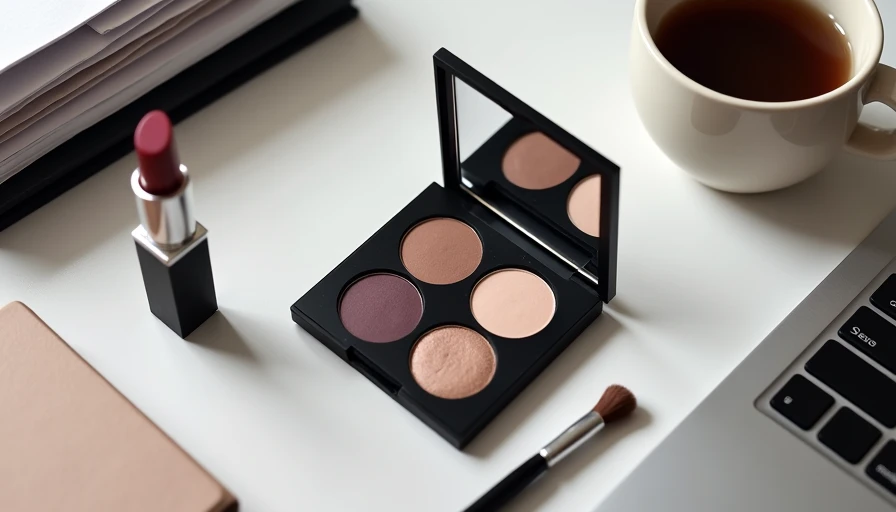
Muted taupe is the safest eye color in an office, and I mean that as a compliment. A warm-leaning taupe reads as a soft natural shadow on the lid, which gives you definition without looking like you are wearing a lot of makeup. The warm undertone is the important part — a taupe with too much grey will do the muddy thing I described above. One wash of muted taupe over the whole lid is enough to look awake and intentional.
Soft Warm Brown: Depth Without Drama
A soft warm brown is what I reach for when I want my eyes to look more defined without looking made-up. It does the heavy lifting in the crease, where it reads like a natural contour instead of a stripe. The trick is to keep it soft: you want a brown that is closer to your skin tone than to a coffee bean, so it melts in rather than announcing itself.
Satin Champagne: The Quick Lift
Satin champagne is the closest thing I have to a fast fix for tired eyes. I use it in small doses — a swipe on the inner corner and a light touch on the brow bone — because a little lift in those spots opens up the eye under flat office light. The word "satin" matters here. True shimmer all over the lid is a different category, and it will glare on you.
Mauve-Plum: Low Saturation, High Polish
Mauve-plum is the shade that reads most like you thought about it, which is why I save it for days when I have an external meeting or a big presentation. The low saturation is the secret: a muted plum stays in the neutral family while adding just enough color to look polished. It works with brown, green, and hazel eyes, and it pairs well with the navy and grey that make up half my closet.

Matte, Satin, and Shimmer: Choosing the Right Finish
Finish matters more than color in office lighting, so here is my rule: matte does the heavy lifting, satin does the highlighting, and shimmer shows up only as a guest. Matte shadows read as skin and hold up in flat light; satin gives a soft sheen that catches light gently; shimmer and glitter reflect too hard and move attention away from what you are saying.
Finish | How It Reads in Office Light | When I Use It |
|---|---|---|
Matte | Soft, skin-like, reliable | Main lid and crease colors |
Satin | Subtle sheen, low reflection | Inner corner and brow bone highlight |
Shimmer | Noticeable reflection | Only as a tiny accent, never all over |
Glitter | High glare, distracting | Not in the office, ever |
A note on the industry side of this: most shadow formulas are tested and photographed in warm, flattering light, not under a ceiling of fluorescent tubes. That is why the same pan can look completely different at your desk. The fix is simple — swatch on your arm, walk to the nearest office light, and make your decision there.
The One-Minute Eye Look for a Regular Tuesday
I have exactly four minutes of makeup time on a normal morning, so my eye routine is built around one minute and two shades. It is a quick way to put together the everyday makeup for professional women that holds up through back-to-back meetings. If it can't survive a Tuesday, it's not worth it.
Shade Family | Use It For | What It Does |
|---|---|---|
Muted taupe | All-over lid wash | Adds definition, reads as skin |
Soft warm brown | Crease and outer corner | Creates depth, looks like contour |
Satin champagne | Inner corner, brow bone | Opens up the eye, adds lift |
Mauve-plum | Liner or outer third | Adds polish on bigger days |
Here is the one-minute version, which I have done in a lot of office bathrooms at 8:55:
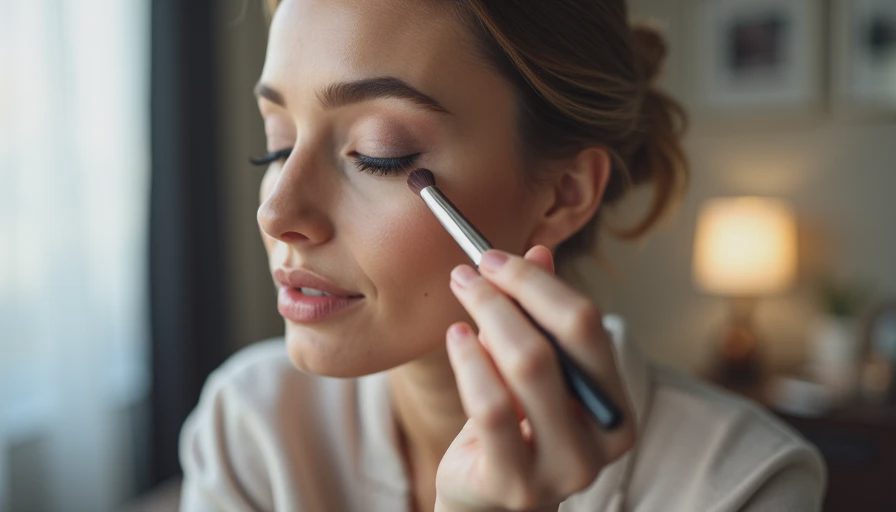
Take one muted taupe and sweep it over the whole lid, using a fluffy brush and short windshield-wiper motions.
Take the soft warm brown and work it into the crease with a small blending brush, moving back and forth until you cannot see an edge.
Tap a little satin champagne on the inner corner and just under the brow bone.
If you want more definition, press the taupe or the brown along the lash line with a flat brush instead of reaching for a liquid liner.
Look in the mirror, lean into the fluorescent light, and check for a visible edge or a muddy patch. Fix those two things and you are done.
The whole point is that this look is forgiving. Because the shades sit close to your skin tone, mistakes blend away instead of staring back at you. And because the finish is mostly matte, it does not move around on you by the 2 PM meeting. That is the test that matters in this job.
A Note on the Rest of the Face
Your eyes and your mouth should not be competing for attention, so I keep my lip color just as low-key as my eye color. When I am wearing one of these eye looks, I reach for office appropriate lipstick shades — a muted rose, a soft nude, a brown-leaning pink — that sit in the same quiet family. One focal point per face is the easiest way to look intentional in a room full of fluorescent light.
That is the whole system. It is not complicated and it is not glamorous, but it is the routine that got me through six years of early mornings, HR meetings, and preschool drop-offs. Pick your shades in office light, keep the finish mostly matte, and give yourself one minute instead of chasing a ten-step routine you will never do on a Tuesday. If a look can survive your regular workday, that is the look worth keeping.