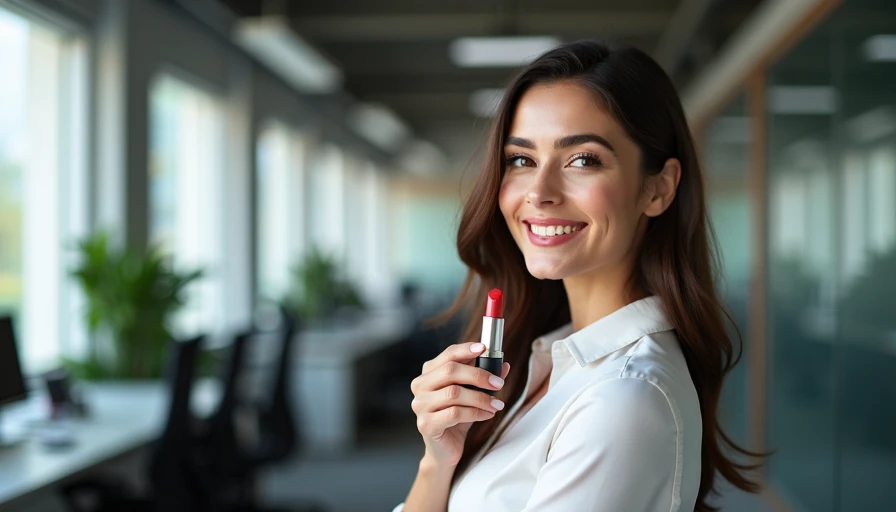
After years of interviews, meetings, video calls, and ordinary office days, I've stopped asking whether a lipstick shade is simply pretty and started asking whether it actually works at work.
That distinction matters. A lipstick can look balanced in a bathroom mirror but appear much brighter on a laptop camera, change under fluorescent lighting, transfer onto a coffee cup, or fade unevenly after lunch.
For me, finding office appropriate lipstick shades is less about following strict makeup rules and more about finding a color and finish that can keep up with a normal workday.
What Makes a Lipstick Office Appropriate?
There is no single lipstick color that is automatically professional.
Muted rose, warm nude, soft berry, brick, and even red can all work in an office. The result depends on your skin's undertone, the intensity of the shade, the finish, your workplace, and how much maintenance you want during the day.
Instead of asking whether a shade is “professional enough,” I find it more useful to test it in four ordinary situations:
How does it look on a video call?
Does the color change under office lighting?
How much does it transfer when you drink coffee or water?
Does it fade evenly after lunch?
A shade that performs reasonably well in all four situations is usually more useful than one that only looks good immediately after application.
The Four-Part Office Lipstick Test
You can test a new shade without wearing it for an entire week. One ordinary workday can tell you quite a lot.
1. Check It on Camera
Open your laptop camera and look at the lipstick on screen before an important call.
Camera processing and automatic white balance can change the appearance of makeup. A strong blue-red may look heavier than expected, while an extremely pale nude can almost disappear.
Look for a shade that still gives your face some definition without becoming the most noticeable thing on the screen.
2. Check It Under Office Lighting
Natural daylight is useful when choosing makeup, but it is not the only lighting you will encounter.
Cool overhead lights can make some pinks appear more purple, while other lighting can make warm shades look more orange. Highly reflective finishes may also create more glare than expected.
If a lipstick looks balanced at home but dramatically different in your conference room, that is useful information before committing to it for a full workday.
3. Check Transfer
A work lipstick does not have to be completely transfer-proof.
Some transfer is normal, particularly with creamy formulas. The question is whether the amount becomes inconvenient.
Try your normal coffee cup or water bottle. A light mark is usually manageable. A heavy ring of pigment may mean you will spend more time thinking about your lipstick than you want to during meetings.
4. Check It After Lunch
Lunch is one of the easiest ways to see how a formula actually wears.
Look at your lips after eating before immediately touching up. A lipstick that fades gradually can still look polished. One that disappears from the center while leaving a strong outline may require more attention.
For a busy workday, I generally prefer a formula that becomes softer as it wears rather than one that breaks apart noticeably.
Lipstick Shades That Tend to Work Well at Work
Different shade families behave differently, but these are useful starting points:
Shade family | Typical workday behavior |
|---|---|
Muted rose | Soft, polished, and relatively easy to wear |
Warm nude | Subtle, but can disappear if too pale |
Soft berry | Adds color without the intensity of traditional red |
Brick | Warm and defined without being extremely bright |
Blue-based red | More dramatic and visually noticeable |
Flat matte nude | Can emphasize dry or textured lips |
High-shine gloss | Reflects more light and usually needs more maintenance |
These are not rules. Your natural lip color and skin undertone can change the result considerably.
A muted rose that looks polished on one person may look too cool on another. A warm nude can be perfect for one skin tone and almost invisible on another.
The goal is to find the version of a shade family that works with your own coloring.
Start With Your Undertone
If lipsticks repeatedly look too orange, purple, or gray on you, consider your undertone before changing the entire shade family.
As a starting point:
Cool undertones: muted rose and soft berry can be useful choices.
Warm undertones: warm nude, terracotta, and brick can work well.
Neutral undertones: both warm and cool shades may work, making balanced muted colors an easy place to begin.
Your natural lip pigmentation matters too. The same lipstick can look noticeably different on two people, even when the shade name is identical.
That is why an actual lip test is more useful than judging a product only from its packaging or a photograph.
Why Satin Is Often a Practical Finish
Finish can be just as important as color.
A satin lipstick sits between a flat matte and a glossy finish. It usually provides enough color to define the lips without creating the dryness or reflectiveness that some people find harder to manage during a workday.
Satin can be particularly practical when you move between your desk, a video call, a conference room, and lunch.
That does not mean matte lipstick is inappropriate for work. If you prefer matte, look for a comfortable formula and pay attention to whether it settles into lip lines or becomes patchy as it wears.
What About Red Lipstick at Work?
Red lipstick does not automatically make a look less professional.
The intensity of the particular red matters more than the simple fact that it is red.
A muted brick red can look quite different from a highly saturated blue-red. If you want more definition without making your lipstick the main focus, brown-leaning reds, brick shades, and muted berry-reds can be useful options.
The same principle applies to every color: professional does not have to mean invisible.
A Simple Work Makeup Shortlist
If I wanted to keep only a few lipsticks in my work bag, I would choose different shades for different situations.
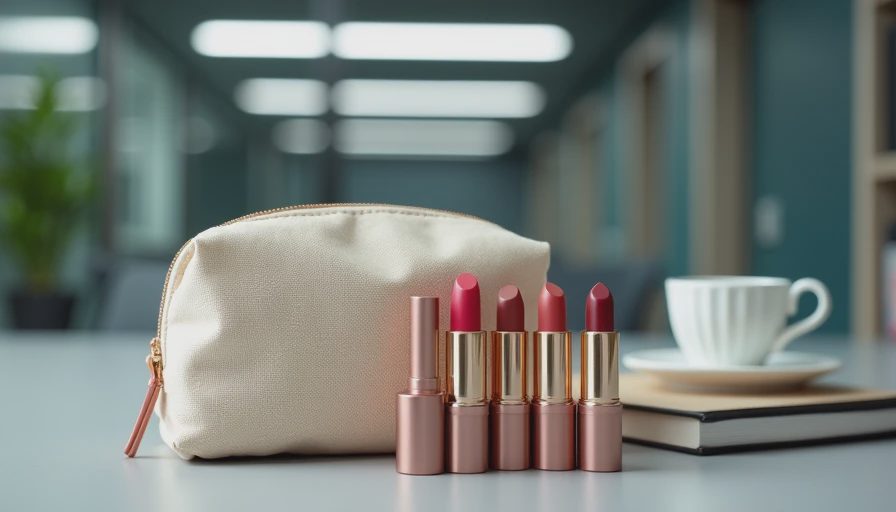
Muted rose satin would be my everyday starting point. It adds enough color to make the face look finished without demanding much attention.
Brick would be my stronger option for presentations, interviews, or days when I want more definition.
Soft berry would be an alternative for anyone who prefers cooler or slightly stronger colors.
The important part is not choosing these exact shades. It is finding versions that work with your own coloring and workplace.
How to Test a Lipstick Before Buying
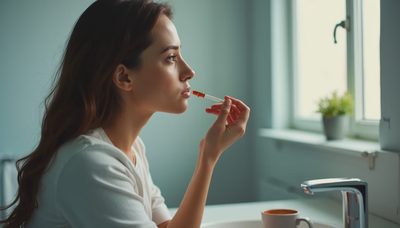
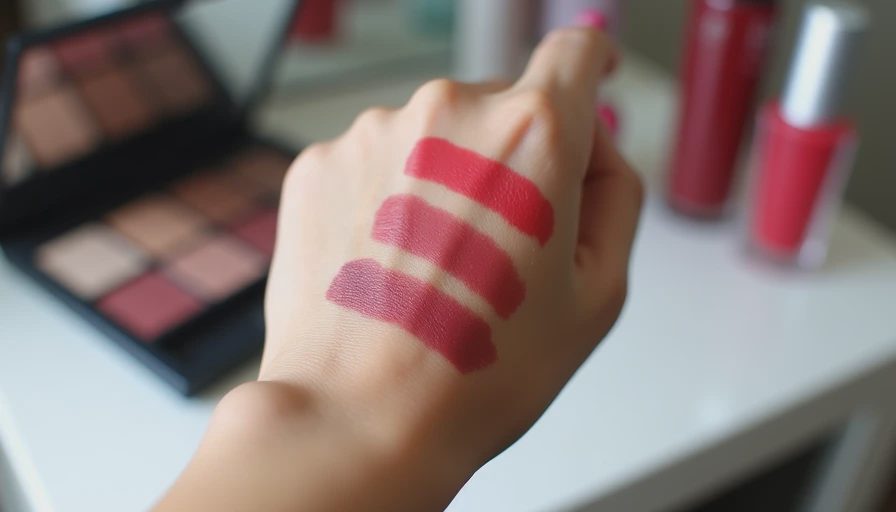
When possible, test lipstick on your lips rather than judging it only from a hand swatch. Hand skin has a different color and texture, so a “warm nude” that looks perfect on your hand may look completely different on your lips.
Then check the shade in more than one type of light.
Before buying or keeping a new lipstick, ask:
Does it still look balanced on camera?
Does it change dramatically under office lighting?
Is the transfer manageable?
Does it fade evenly after eating?
Would I actually want to reapply it during a busy workday?
Those questions tell you much more than the lipstick's color name.
The Bottom Line
The best office appropriate lipstick shades are not necessarily the palest, safest, or most traditional colors.
A muted rose satin can be an easy everyday choice. A brick shade can provide more definition. A soft berry can add color without requiring a classic red.
What matters most is how the shade behaves in the conditions you actually experience.
Test it on camera, check it under your office lighting, see what happens with your morning coffee, and look at it again after lunch. If the color still feels like a polished version of yourself several hours later, you have probably found a lipstick that deserves a place in your work bag.